

Achievements obtained by Dr. Godin & Dr. Kudriashov
15 years ago Andrea Rossi demonstrated a device the size of a small suitcase, producing 10 kW of heat while consuming only a few hundred watts of electricity. What was known about this device was that it heated nickel powder in a hydrogen atmosphere in the presence of a secret catalyst. At the same time, Russian scientists from Moscow Yu.N.Bazhutov and A.G.Parhomov were conducting their experiments in Moscow, at the Kurchatov Institute of Atomic Energy. They studied nickel powder and the LaNi5 alloy, which absorbed hydrogen well. A mixture of hydrogen isotopes – protium and deuterium in various proportions – was used for hydrogenation.
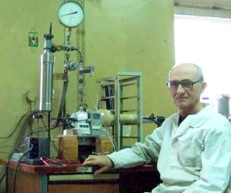
A.G.Parhomov near the QHET setup in Kurchatov Institute of Atomic Energy.
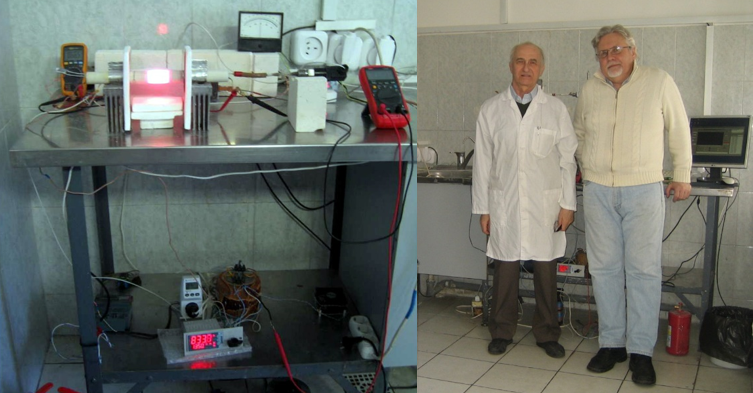
In the photo is a previous mockup model for “Quantum Hydro Energy Transducer”(QHET) reactor that has worked for 7 months from Oct 10, 2017 and May 23rd, 2018. S. Godin and A. Parkhomov in Parkhomov’ s laboratory. It can be confirmed that the measurements were made correctly.
Among the many reactors tested during this time, the M7 reactor stands out, having operated continuously for 225 days from October 10, 2017 to May 23, 2018, with a heat release power in excess of the consumed electrical energy from 200 to 1000 W (COP up to 3.6). The temperature inside the reactor reached 1800 °C. The design and operation of this reactor are described in detail in the article. Hydrogen-saturated nickel powder weighing 1.2 g was used as fuel in the reactor. During operation, there was a gradual decrease in excess heat release. Apparently, this was due to the depletion of the fuel’s energy resource, which made it possible to experimentally estimate the maximum possible energy release in reactors of this type. The total production of excess energy is about 4100 MJ. 2.1 MeV of energy was released per 1 nickel atom – millions of times more than is possible in the process of chemical reactions.
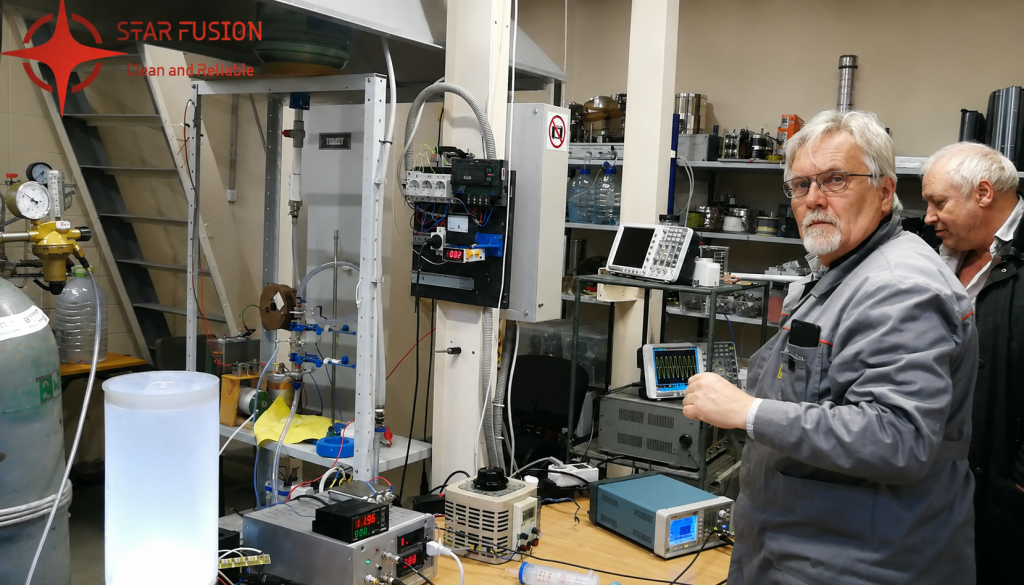
Dr. Godin tested Star Fusion QHET reactor in 2025
Achievements obtained by Dr. Klimov
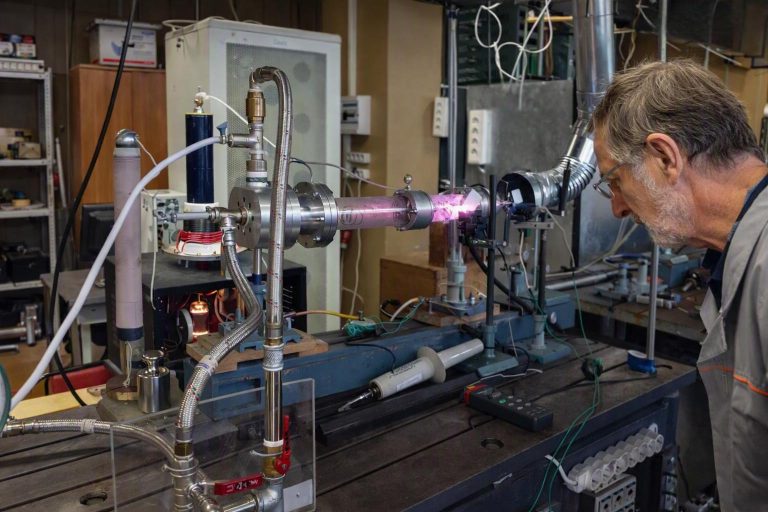
The 2024 PVR-W replaces the external steam generator with a water-swirl chamber. A water flow of approximately 30 L/min surrounds an argon cavity, while pulsed discharge heating evaporates water directly at the gas–liquid interface. This reduces steam-line heat losses and places the heat-transfer medium closer to the active discharge zone. That output thermal power increased from 1–3 kW in earlier versions to as much as 10 kW. An LC circuit produces stable self-sustained relaxation oscillations; the experiments without this mode yielded COP values of 0.73–0.80, whereas the table reports 1.62–2.82 when relaxation oscillations were present. By the end of 2025, following adjustments to the PVR’s new energy activation pathway, the COP of the newly optimized system is expected to reach approximately 6–8.
Hydrogen Generation & Metal Hydrides
• Hydrogen mass flow rate: With a water-vapor input flow of 1 g/s, the measured maximum hydrogen production rate reached 1 mg/s (10^-3 g/s).
• Dry outlet gas hydrogen concentration: Measured by an AVP-01 analyzer, the hydrogen concentration in the dry outlet gas reached 20–30 vol%.
• In-situ metal hydride synthesis: Theoretical complete dissociation should produce 33% hydrogen; the missing 3–13% hydrogen is dynamically absorbed by metal nanoclusters produced through electrode erosion (~1 mg/s), forming high-energy metal hydrides (MHx) in situ.
• Reaction specific energy density (q): Normalized to consumed reaction atoms, the specific energy reached q ≈ 1–10 keV/atom, nearly 1,000 times beyond the chemical reaction limit.
- PVR experiments have detected predominantly soft X-rays in the 0.1–30 keV range, with a principal peak at approximately 1.30 keV and secondary peaks at 4.0–4.6 keV. These relatively low-energy photons have limited penetration compared with higher-energy X-ray radiation and can be effectively managed through appropriate reactor shielding and engineering controls. Importantly, PVR radiation safety will be demonstrated through independent dose-rate and leakage-radiation measurements, with the objective of maintaining accessible exposure well below applicable regulatory limits. The X-ray signal may also provide a valuable real-time diagnostic and control parameter for maintaining the optimal PVR energy regime.